👨🎓 About Me
I am currently a professor at the School of Information Science and Technology, Hangzhou Normal University, and lead the Intelligent Video Coding (IVC) Lab. My research focuses on advanced visual media representation and processing, with particular emphasis on image and video coding, point cloud compression, 3D representation and reconstruction, and hardware AI accelerators .
I have published over 90 high-quality papers in leading journals and conferences, including Proceedings of the IEEE, TPAMI, TIP, TVCG, TCSVT, TMM, etc., as well as top conferences such as CVPR, ICML, AAAI, IJCAI, and ACM MM. I have been actively engaged in international video coding standardization activities since 2007. My early contributions included work on MPEG Reconfigurable Video Coding (RVC), and in 2011, I was awarded the MPEG Appreciation Prize in recognition of my work in RVC.
I am a IEEE Senior Member and maintain active involvement in the IEEE Signal Processing Society and the IEEE Circuits and Systems Society. I served as Organizing Co-Chair of the ICME Workshop in 2023 and as International Liaison Co-Chair for the IEEE MMSP in 2024. I currently serve as an Associate Editor for IEEE Signal Processing Letters (SPL).
🔥 News more news
- 2026.01: 📢 Serving as Area Chair for ICASSP 2026 and ICME 2026.
- 2025.10: 📄 Paper on "GeoQE" (Point Cloud Streaming) accepted by ACM MM 2025.
- 2025.07: 🎉 One paper on LiDAR reflectance compression accepted by ICML 2025.
- 2025.06: 🚀 Presented "Reno" (Real-time Neural Compression) at CVPR 2025.
- 2025.01: 📑 Research on Multiscale Point Cloud Compressor published in IEEE TPAMI.
📝 Publications more publications
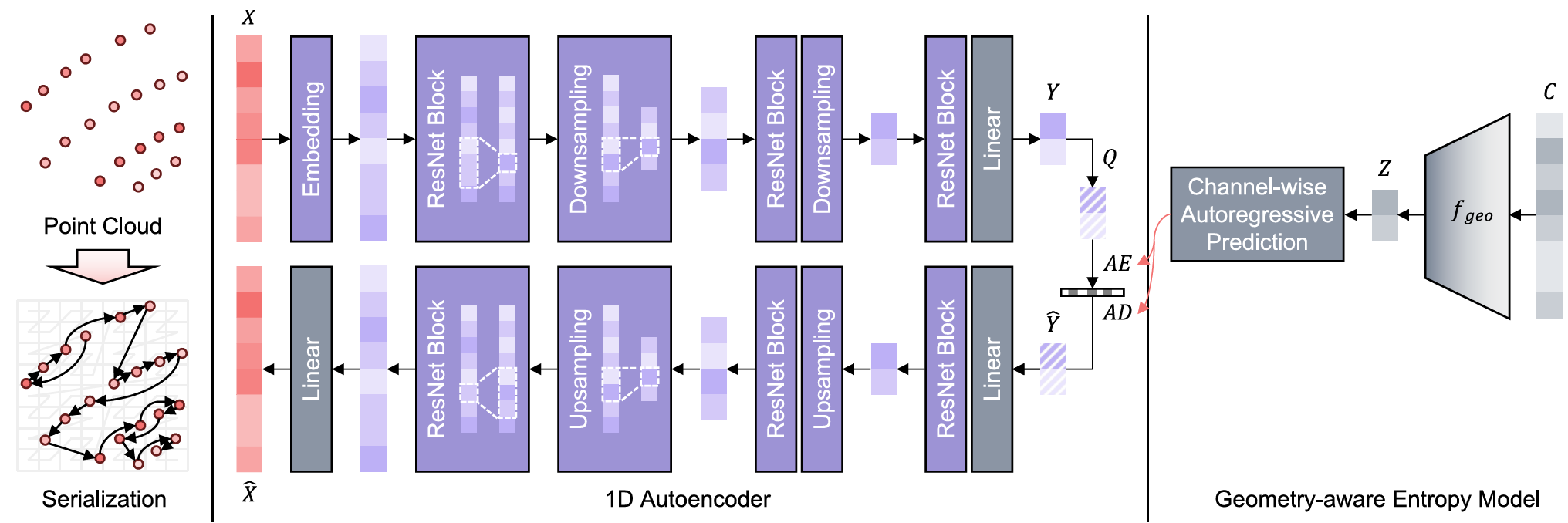
EDRIC: Embracing 1D Autoencoder for Real-Time Lossy LiDAR Reflectance Compression Jiahao Zhu, Kang You, Kequan Mao, Dandan Ding*, Zhan Ma
- we introduce EDRIC, a highly effective neural compression framework that offers state-of-the-art compression efficiency while achieving real-time capability. To overcome the suboptimal downsampling scheme and inefficient feature extraction in conventional 3D frameworks, EDRIC serializes a 3D point cloud into a 1D sequence and introduces a lightweight 1D autoencoder to efficiently compress the serialized LiDAR reflectance signal. In addition, we explicitly incorporate geometric priors through a geometry-aware entropy model, effectively exploiting the interdependencies between reflectance attributes and underlying geometry.
Adaptive AV2 In-loop Filtering via Guided Neural Model with Vectorized Quantization Jiahao Zhu, Kang You, Dandan Ding*, Zhan Ma
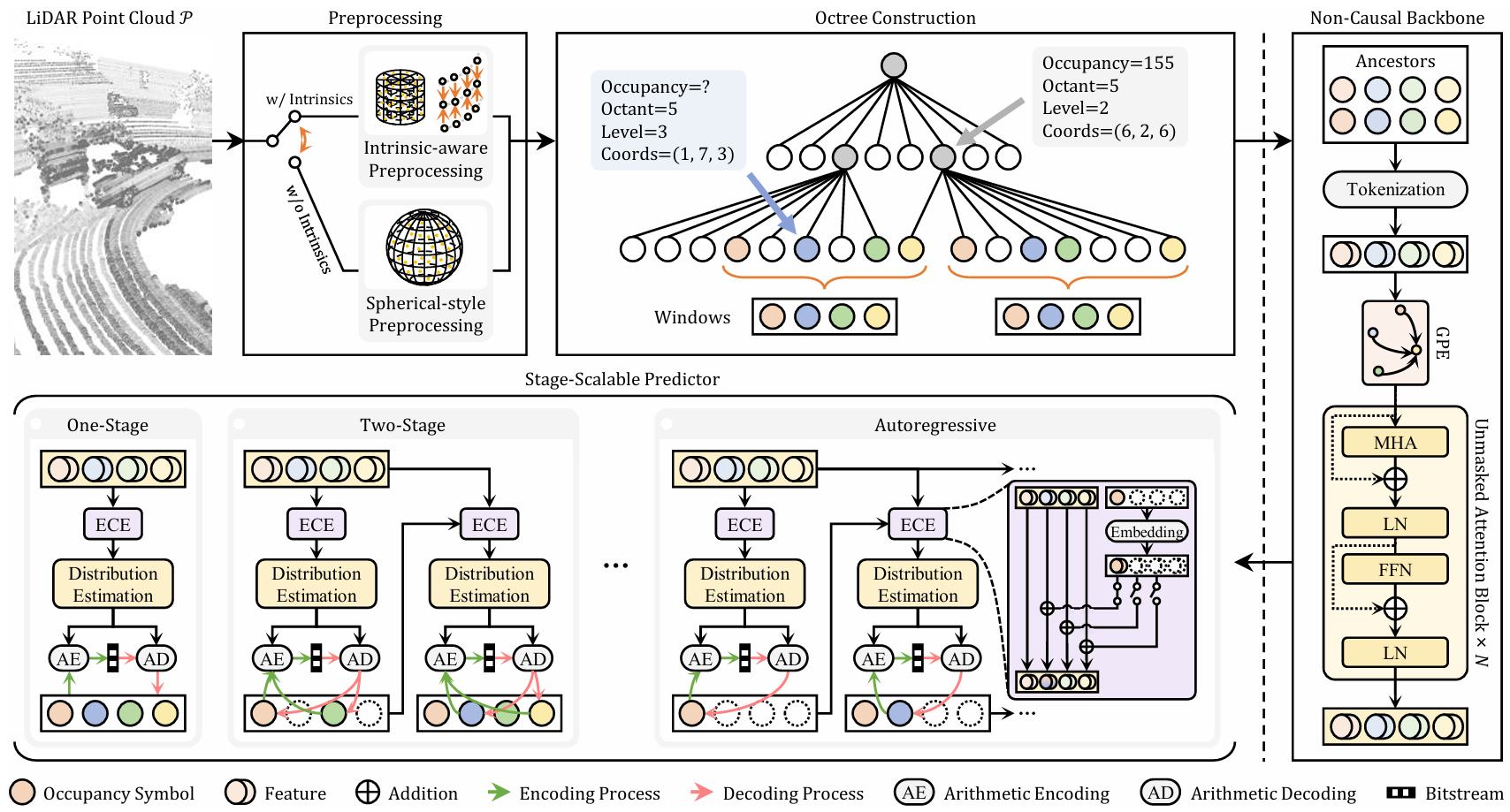
- we propose PACE, a new framework that reformulates ancestral context aggregation as a non-causal backbone and confines causality to a lightweight, stage-scalable predictor, eliminating repetitive backbone executions and reducing computational overhead. The predictor supports an arbitrary number of prediction stages, enabling seamless adaptation across diverse performance-latency trade-offs without reloading parameters.
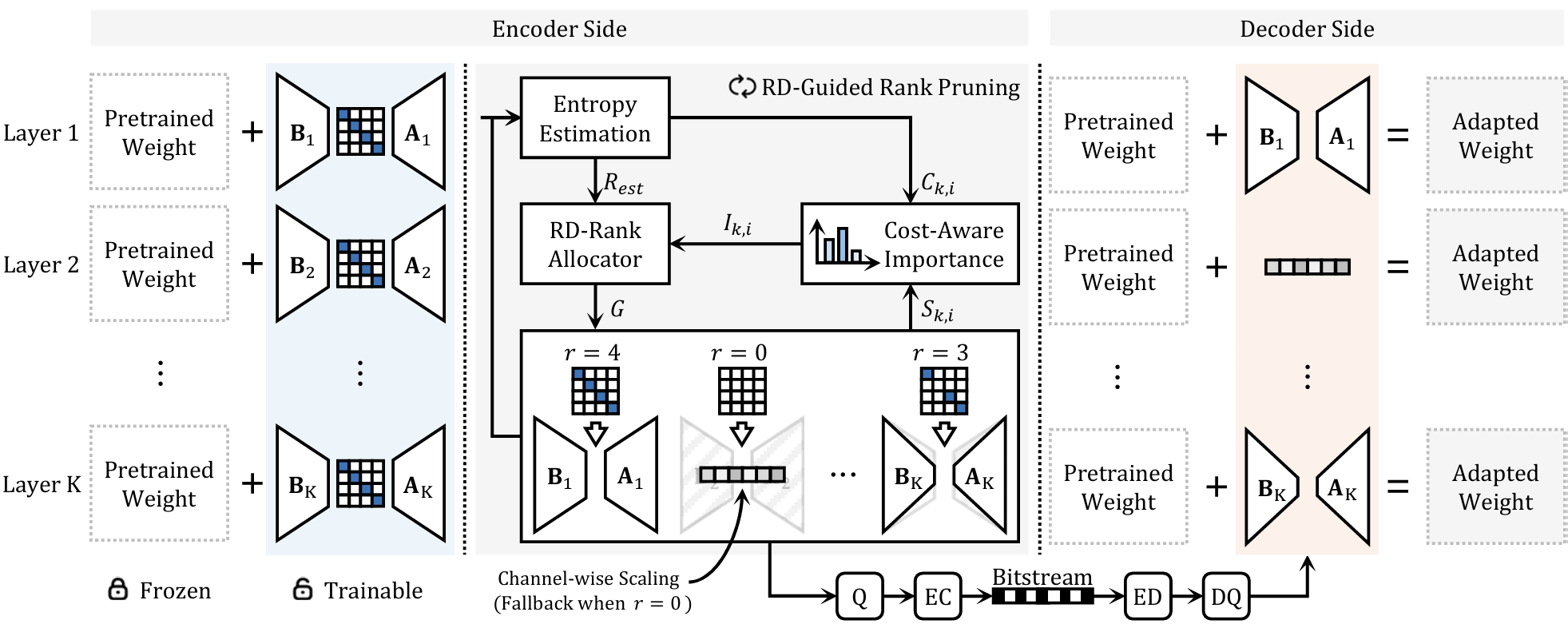
RATE-DISTORTION OPTIMIZED LORA FOR EFFICIENT POST-FILTERING IN AV2 Kequan Mao, Xin Yang, Dandan Ding*, Urvang Joshi, Debargha Mukherjee
- we proposes RD-LORA, a rate-distortion (R-D) optimized low-rank adaptation (LoRA) framework for neural post-filtering in the upcoming AV2 coding standard. RD LoRA adapts a pre-trained base neural model to diverse input content via online updates to LoRA parameters, whose quantity is determined by the matrix ranks. The updated parameters are then quantized, transmitted to the decoder, and merged with the pre-trained weights for post-filtering.
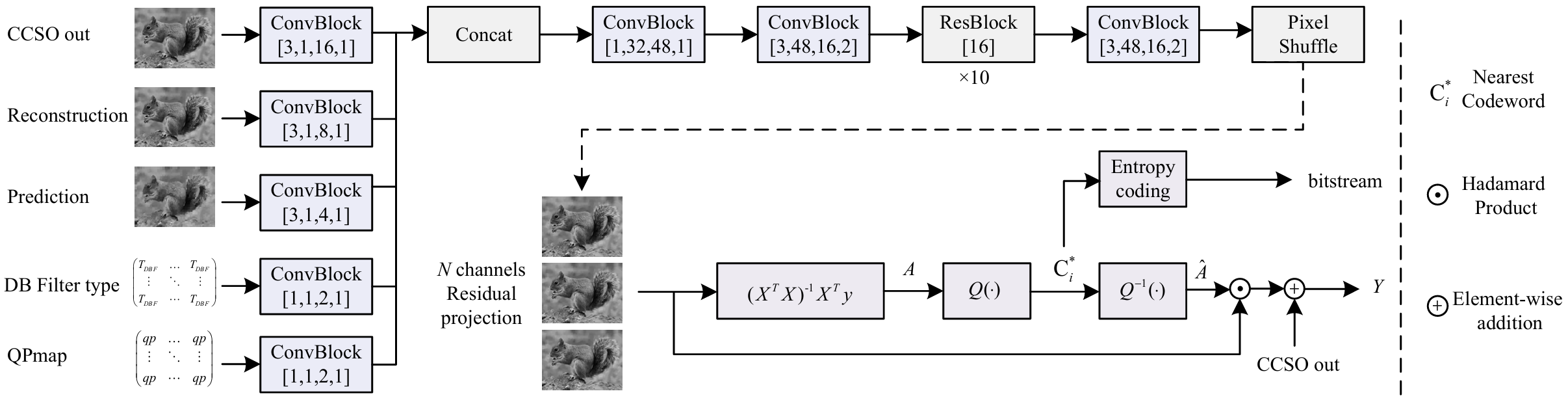
Adaptive AV2 In-loop Filtering via Guided Neural Model with Vectorized Quantization Kequan Mao, Dandan Ding*, Urvang Joshi, Debargha Mukherjee
- we proposes a neural self-guided filter for AV2, introducing two key techniques: (i) adaptive selection of the number of guidance channels for higher coding efficiency, and (ii) a vector quantization method for lower bitrate overhead. Our method is general and applicable to any network architecture.
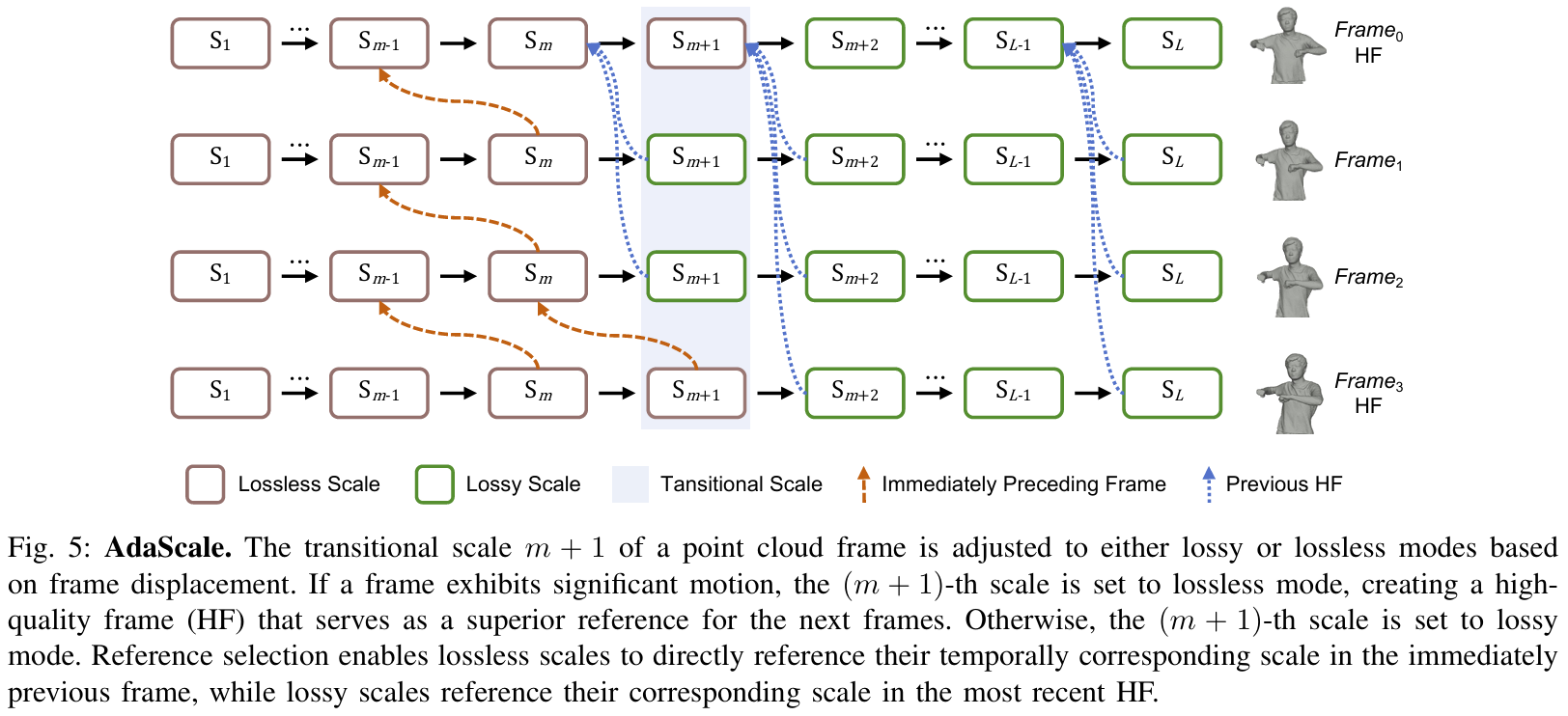
Improving Occupancy Prediction for Multiscale Point Cloud Geometry Compression Zehong Li, Jiahao Zhu, Dandan Ding*, Zhan Ma
- We propose two new techniques. The first is KPA (Key Point-driven Attention), which integrates both local and global characteristics. The second is AdaScale (Adaptive Lossy/Lossless Scale), which decides whether the transitional scale should be in lossless or lossy mode based on temporal displacement, thereby enhancing the reconstruction quality of the temporal reference.
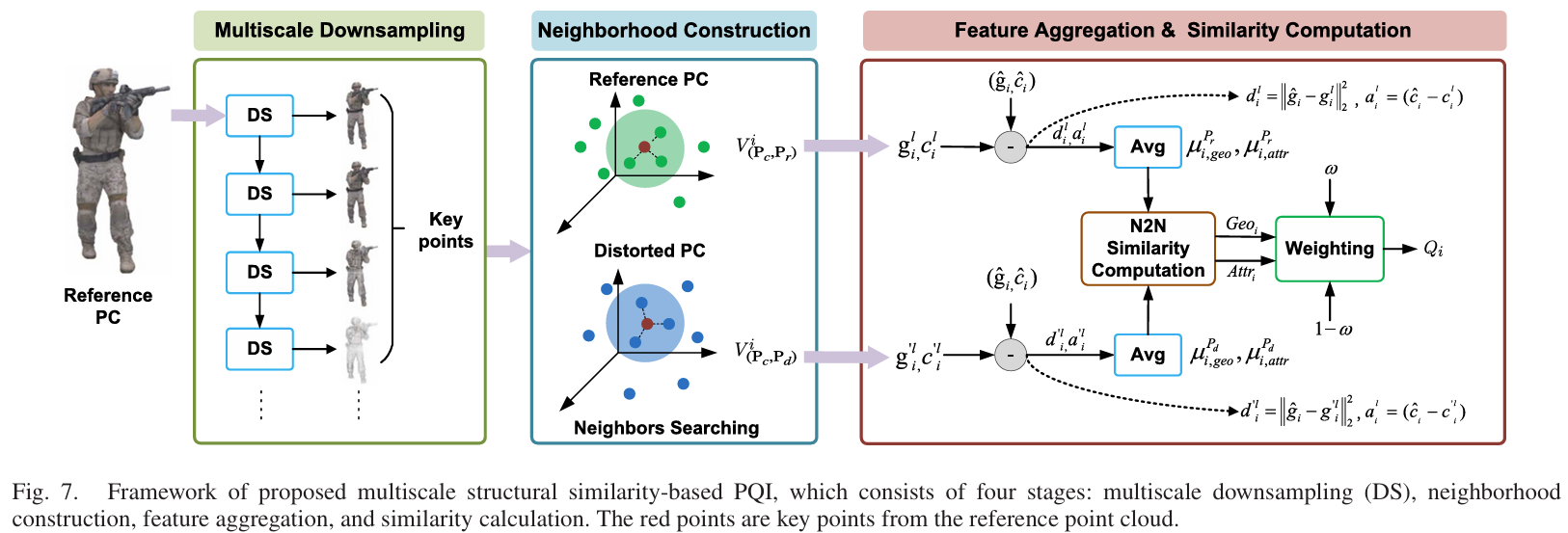
Revisit Point Cloud Quality Assessment: Current Advances and a Multiscale-Inspired Approach Junzhe Zhang, Tong Chen, Dandan Ding*, Zhan Ma
- We paper proposes PQI, a simple yet efficient metric to index point cloud quality. PQI suggests using scale-wise key points to uniformly perceive distortions within a point cloud, along with a mild neighborhood size associated with each key point for compromised N2N computation.
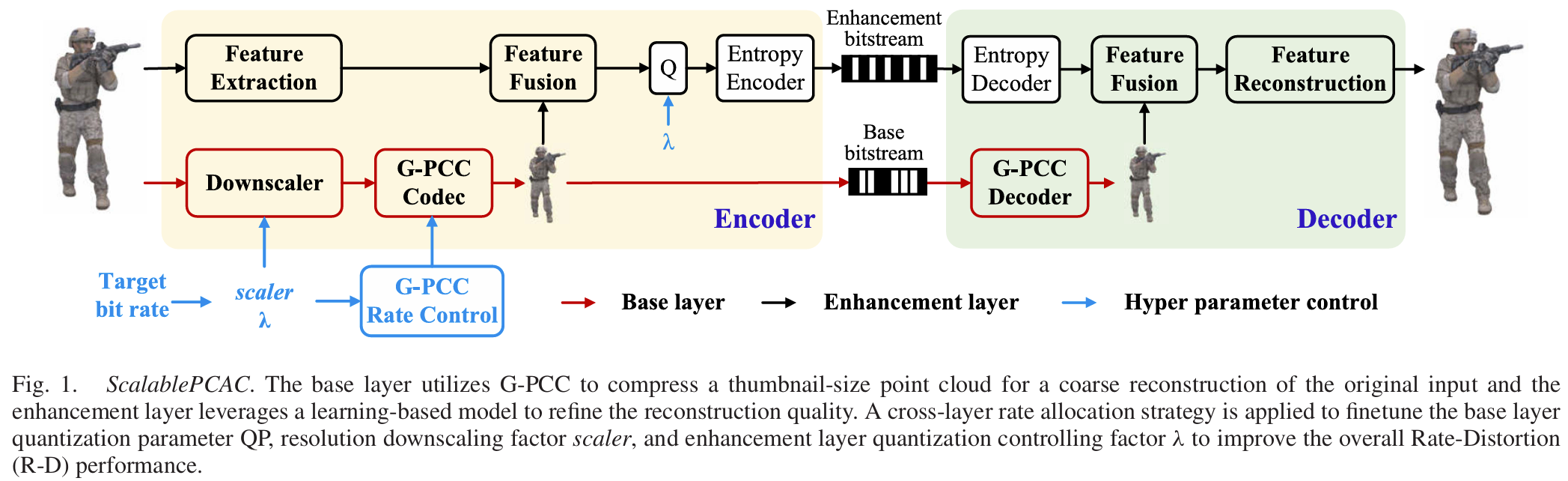
Scalable Point Cloud Attribute Compression Junzhe Zhang, Jianqiang Wang, Dandan Ding*, Zhan Ma
- We develops a Scalable Point Cloud Attribute Compression solution, termed ScalablePCAC. In a two-layer example, ScalablePCAC uses the standard G-PCC at the base layer to directly encode the thumbnail point cloud that is downscaled from the original input, and a learning-based model at the enhancement layer to compress and restore the full-resolutioninput point cloud conditioned on the base layer reconstruction.
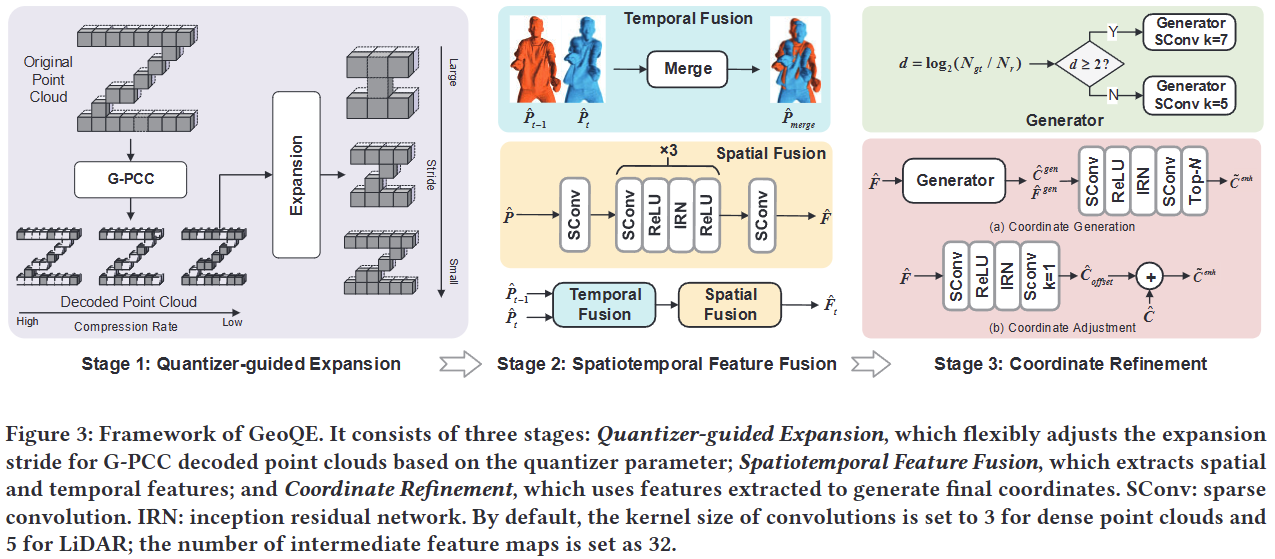
GeoQE: Enhancing Quality of Experience in Point Cloud Streaming
Junzhe Zhang, Chengfeng Han, Dandan Ding*, Zhan Ma
- we propose GeoQE, an enhancement model that seamlessly integrates with the G-PCC decoder to mitigate compression artifacts and improve QoE.
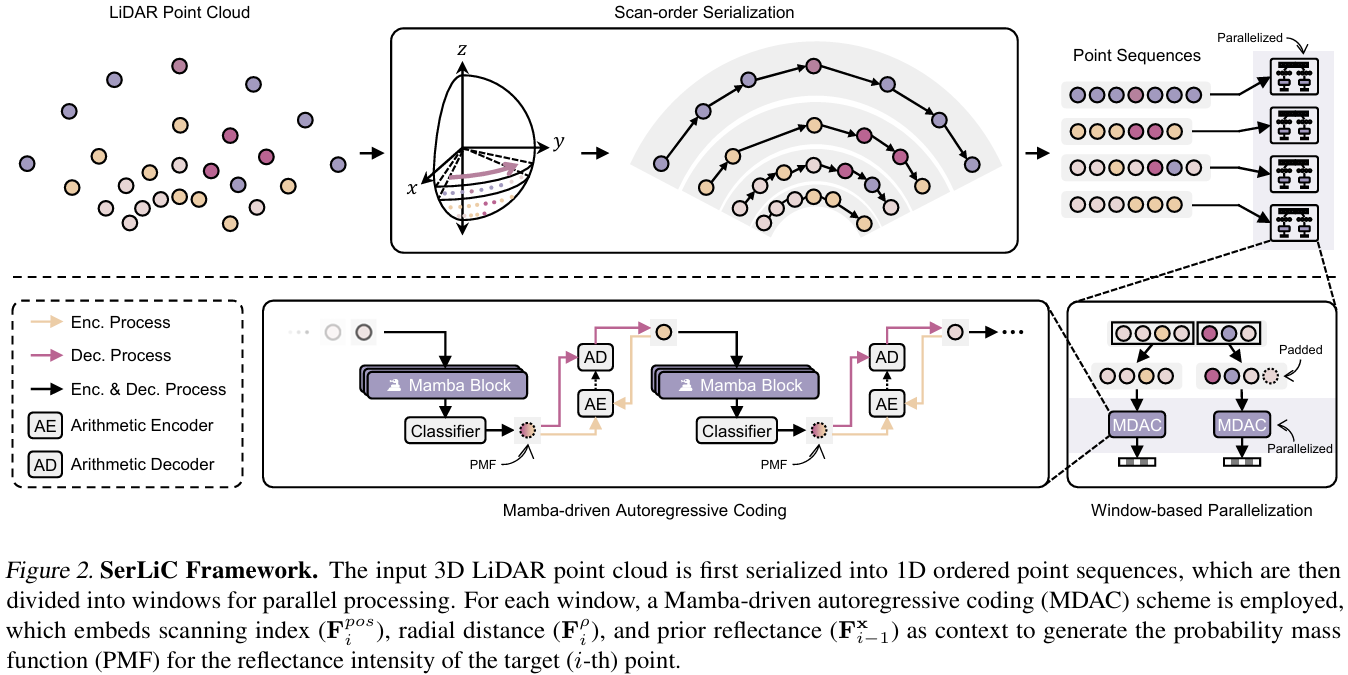
Efficient LiDAR Reflectance Compression via Scanning Serialization
Jiahao Zhu, Kang You, Dandan Ding*, Zhan Ma
- We introduce SerLiC, a serialization-based neural compression frame work to fully exploit the intrinsic characteristics of LiDAR reflectance.
🎖 Honors and Awards
-
2024.06 Best Paper Award Finalist, IEEE PCS 2024.
-
2011.06 ISO/IEC Appreciation Prize, for leadership in MPEG standardization.
📖 Educations
-
2006.09 - 2011.06, Zhejiang University, China. Ph.D. in Communication and Information System.
-
2007.07 - 2008.05, EPFL, Switzerland. Joint Ph.D. program in GR-LSM.
-
2002.09 - 2006.06, Zhejiang University, China. B.S. in Communication Engineering.
💻 Professional Experience
-
2020.12 - Present, Professor, Hangzhou Normal University. Lead IVC lab.
-
2015.12 - 2020.11, Assistant Professor, Hangzhou Normal University.
-
2013.07 - 2015.11, Assistant Professor, Zhejiang University.